Blaufränkisch: the red grape of Central Europe
Blaufränkisch is the great red grape of Central Europe, and the variety behind some of Austria’s best red wines. It is full of spice and forest fruit, light to medium in body, and it shows clearly which soil it came from. Many people still do not know it, partly because nearly every country calls it something else.
One grape, many names
The name means “blue Franconian”. In the Middle Ages Fränkisch was the word for the respected varieties, as opposed to the simpler “Hunnic” ones, so the name speaks first of status rather than place. Under its present name it is first recorded in 1862, at a fair in Vienna, but it is probably much older.
In Hungary it is Kékfrankos, a translation of the same name. In Germany it is Lemberger, in Czechia, Croatia and Serbia Frankovka, in Slovakia Frankovka Modrá and in Slovenia Modra Frankinja. For a long time it was also wrongly thought to be related to Gamay. And a Hungarian legend tells of Napoleon’s soldiers, who got the good wine from local growers only in exchange for the valuable “blue” francs. Lovely, but a legend.
Where it comes from
A German study from 2016 found that it probably originated in Lower Styria, today Štajerska in Slovenia, and that its parents are Blaue Zimmettraube and the ancient white variety Heunisch, also known as Gouais Blanc. In 2022 another theory was proposed, pointing to the Thermenregion south of Vienna.
The German names tell the route too. Lemberger is named after Lemberg in Lower Styria, from where vines left for Germany in 1877, and Limberger after the village of Limberg near Maissau, in Lower Austria. The variety also has a famous child: in 1922 Fritz Zweigelt crossed it with St. Laurent, and so Zweigelt was born, Austria’s most widespread red grape.
In the vineyard and in the glass
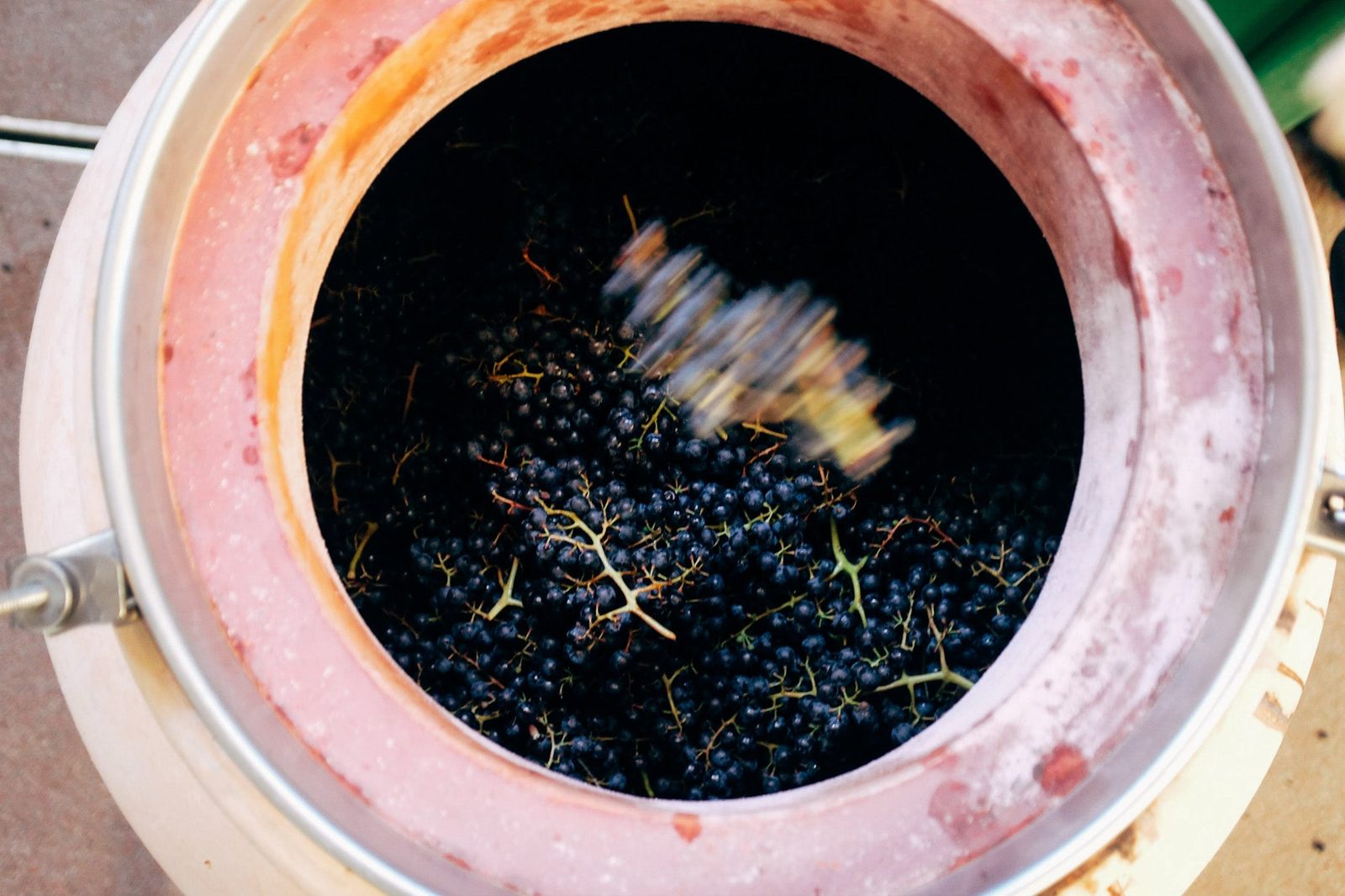
The vine buds early and ripens late, so it needs a long season, and spring frost can hurt it. Its thick skin helps it stand up to rainstorms, it is hardy in winter and it does well on limestone.
In the glass you will find cherry and forest berries, pepper and spice, an earthy touch, lively acidity and taut tannin. The good bottles develop beautifully over the years. Local winemakers like to compare it to Pinot Noir, because it too tells neighbouring vineyards apart. Dorli Muhr, a winemaker from Carnuntum, calls it “a translator of the terroir”.
Austria: the road to the vineyard wine
More than 90% of Austria’s Blaufränkisch grows in Burgenland, on some 2,500 to 3,000 hectares (sources differ), and it is the country’s second red grape after Zweigelt. After the Second World War, industrial farming and high yields gave thin, acidic reds. The turning point came after the 1985 scandal: in 1986 Ernst Triebaumer of Rust harvested the Mariental vineyard, a wine still seen as a milestone.
In the 1990s the grape moved to a big style, with strong extraction and new oak. In the 2000s, following estates such as Roland Velich’s Moric, the pendulum swung back: less intervention in the cellar and more expression of the single vineyard. The guide to Burgenland and Lake Neusiedl.
Five regions, five styles
Mittelburgenland: “Blaufränkischland”. Heavy loam soils give some of the most powerful wines, with firm tannin and the ability to age.
Eisenberg: in the south, in a cooler climate and on iron-rich schist. Some of the spiciest, most savoury wines of the grape come from here.
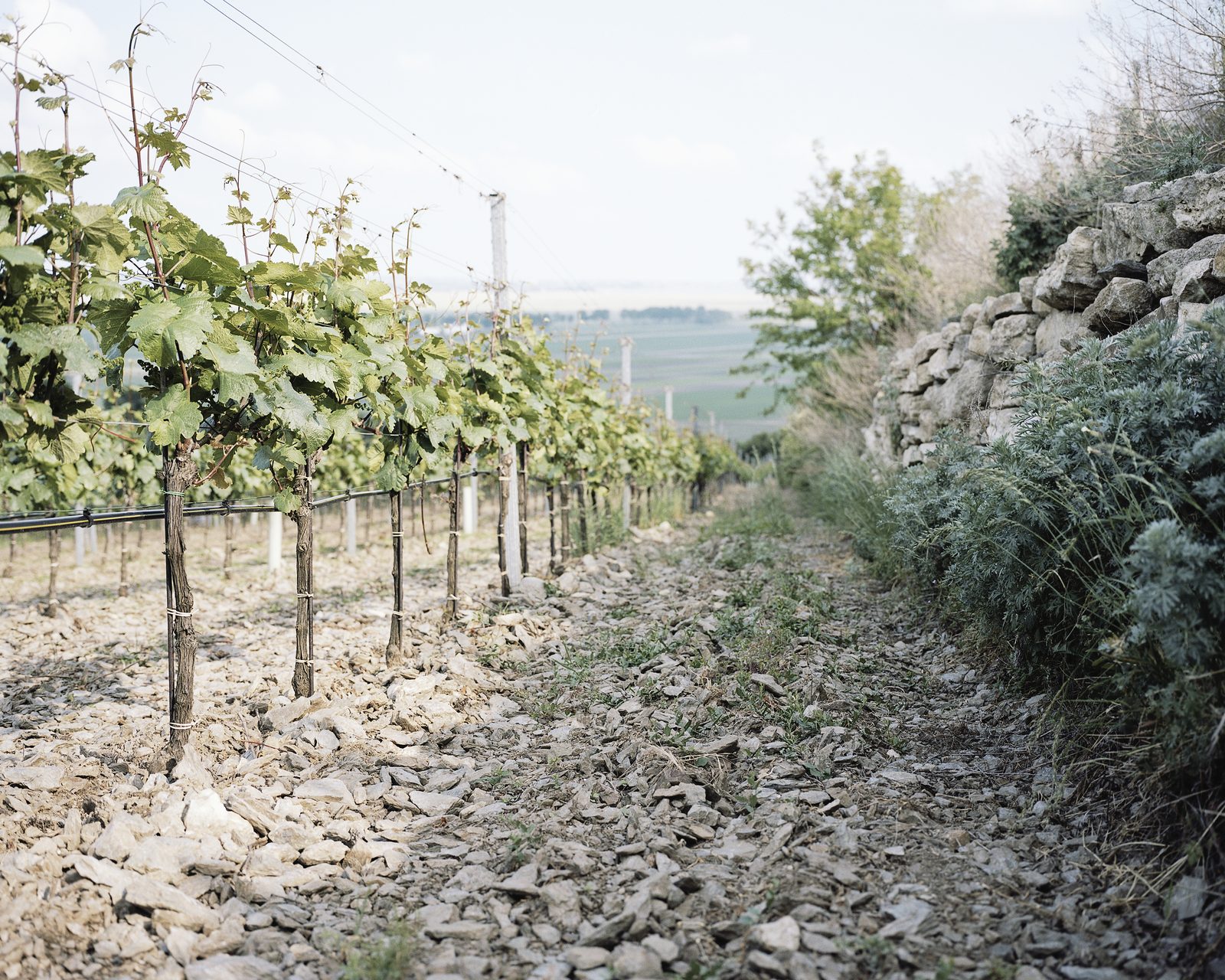
Leithaberg: on the slopes of the Leitha range, on limestone and slate and sometimes at altitude. The wines are lighter, higher in acid and restrained. Among those working here are Sommer and Nittnaus.
Lake Neusiedl: the warm climate and the effect of the lake give a richer, riper wine. Gols, home to several of our estates, is here.
Carnuntum: in Lower Austria, on the slopes of the Spitzerberg and on sandy limestone, with some of the grape’s most elegant, tense wines.
Beyond the borders
Hungary: nearly half of the world’s Blaufränkisch grows here, about 8,000 hectares, and it is the country’s most planted variety. Sopron, which runs on from the Hungarian shore of Lake Neusiedl, is seen as its capital, and it is also a key part of Egri Bikavér, the “Bull’s Blood” of Eger.
Germany: nearly 2,000 hectares of Lemberger, almost all of them in Württemberg, where it tends to be leaner.
Czechia, Slovakia and Slovenia: in Czechia and Slovakia it is the most planted red grape. The guide to Moravia. And in the hills of Štajerska, perhaps its birthplace, it gives young, fresh wines, also at Vino Gross.
How to drink it
A light Blaufränkisch, like many wines of the new generation, is especially good chilled to 14–16 degrees. Chilled red wine: the guide. It goes well with game and grilled meat, vegetables with plenty of herbs, pasta and sharp cheeses, and its acidity helps with rich dishes too.
Eleven bottles with Blaufränkisch
Questions
30.10.2026