Moravian wine: the regions, the grapes and natural wine
Almost all Czech wine comes from Moravia, in the south-east of the country: 96% of the vineyards are there, on the borders with Austria and Slovakia. The grapes are the same as on the Austrian side, under Czech names, with a few local ones beside them. And over the last twenty years one of the most interesting natural wine scenes in Europe has grown here, one that hardly reaches Israel.
Austria’s northern continuation
Moravia sits right above the Weinviertel, Austria’s largest wine region, and the river Dyje (Thaya in German) runs through both. Soils and climate are alike: continental and fairly cool, with warm days and cold nights. So here too the whites are fresh and aromatic, and the reds light and spicy. Our guide to Austrian wine.
Wine has been made here at least since the Romans. The Tenth Legion kept an outpost by the Pálava hills, and digs there turned up a vine-pruning knife. For centuries Moravia was part of the Habsburg empire, and its wine competed with Austria’s, so much that in 1763 Austrian winemakers asked Empress Maria Theresa to limit new vineyard planting in Moravia.
Forty years of cooperative wine
After 1948 the communist regime nationalised the vineyards, and the border with Austria closed. Wine moved to state farms and cooperatives, which put quantity before quality: they planted high-yielding grapes, and a private winemaker could only make wine for his own use. After the Velvet Revolution of 1989 the land went back to the families, and since then hundreds of small wineries have opened, most of them family estates.
The four regions
Znojmo (Znojemská): the westernmost, along the Dyje, facing the Weinviertel. Cold winds come down from the Bohemian-Moravian Highlands, and the swing between day and night keeps the aromas. It is a land of fresh whites, Grüner Veltliner, Sauvignon Blanc and Riesling, on granite, gneiss and loess. The first Czech origin system, VOC Znojmo, was born here in 2009. And in the heart of the Podyjí National Park, the Czech side of Austria’s Thayatal park, lies the Šobes vineyard, counted among the oldest in Europe, on a south-facing slope above the river.
Mikulov (Mikulovská): the Pálava hills, a limestone ridge rising over the plain, with deep loess around it. The wines are spicy and mineral. The Czech National Wine Centre is in nearby Valtice castle.
Velké Pavlovice (Velkopavlovická): the heart of Moravian red wine, Frankovka, St. Laurent and Zweigelt. The village of Velké Bílovice has more vineyards than any other village in the country.
Slovácko (Slovácká): the east, on the Slovak border. Vineyards in the Morava valley and in the hills of the White Carpathians, and a land of folklore and cellar villages, like the Plže cellars in Petrov, small white houses painted with blue.
Closer: Hnanice
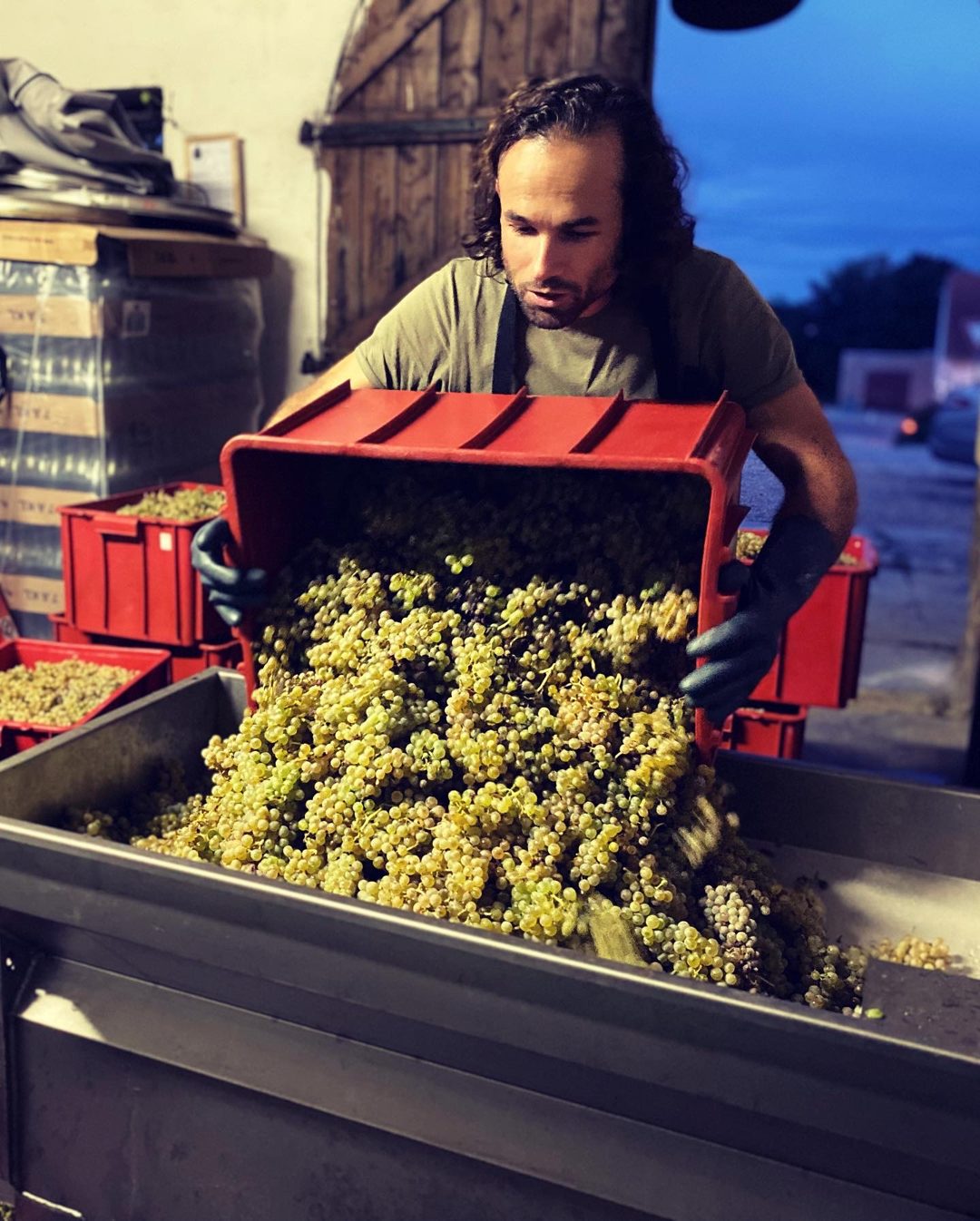
Martin Vajčner farms small vineyards around Znojmo, and his cellar is in the village of Hodonice. One of them, Knížecí vrch in Hnanice, lies inside the national park: 0.7 hectares of Welschriesling planted in 1993, on a south-east slope at 280–336 metres, on quartz, granite and gneiss. Warm summer days, cold nights, and only 480 mm of rain a year. This is where our Hnanice II comes from: direct press, spontaneous fermentation, and a bottle that is unfiltered, with no added sulphur.
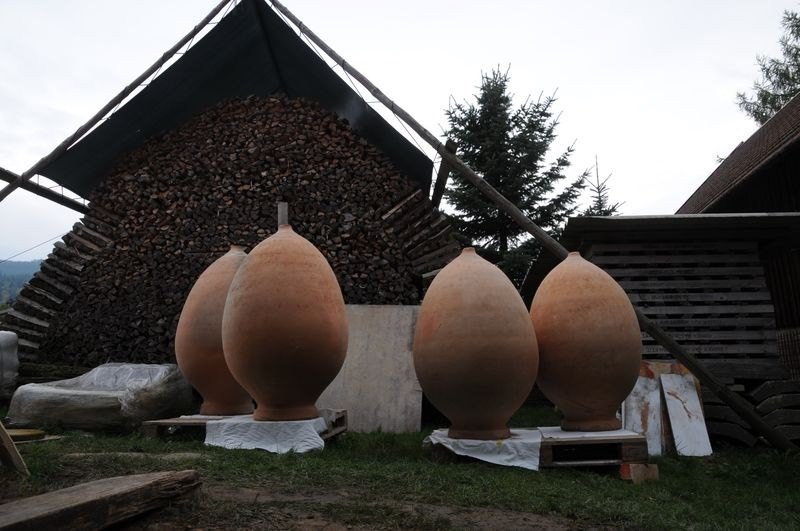
By the cellar stand four qvevri, the Georgian clay jars, made by a local potter from clay from nearby Šatov. What is orange wine.
The grapes, and their Czech names
Ryzlink vlašský: Welschriesling. Moravia’s old white, fresh and salty. Under communism it went mostly into cheap wine by the tank; with small growers and old vines it shows depth and salinity.
Veltlínské zelené: Grüner Veltliner. Our guide to Grüner.
Ryzlink rýnský: Riesling.
Rulandské: the Pinot family. bílé is Pinot Blanc, šedé is Pinot Gris and modré is Pinot Noir. More Czech white wine is made from Pinot Gris than from any other grape, and more red from Pinot Noir.
Pálava: a Moravian grape, a cross of Gewürztraminer and Müller-Thurgau bred by Josef Veverka. Aromatic and spicy.
Muškát moravský: Moravian Muscat, aromatic and light.
Frankovka: Blaufränkisch. After Pinot Noir, the grape that gives the most Czech red wine.
Svatovavřinecké: St. Laurent.
Zweigeltrebe: Zweigelt.
Reading a Czech label
Origin comes in four steps: Vinařská oblast (the region, Morava), podoblast (the subregion, for example Znojemská), obec (the village) and trať (the vineyard, like Ried in Austria).
Kabinetní víno, Pozdní sběr, Výběr z hroznů and more: grades by the ripeness of the grapes at harvest, as in Germany, and in them no sugar may be added to the must. They do not say how sweet the wine is. For that, look for suché (dry), polosuché (off-dry), polosladké (medium sweet) or sladké (sweet).
VOC (Víno originální certifikace): an origin system in the style of the French AOC, which sets the grapes and the style for each area. VOC Znojmo was the first, in 2009, and more followed, like VOC Pálava in Mikulov and VOC Mutěnice in Slovácko.
Autentisté: Moravia’s natural wine
In the late 2000s a group of Moravian winemakers, among them Richard Stávek, Bogdan Trojak and Ota Ševčík, signed a shared charter and called themselves Autentisté, “the authentic ones”. The rules: organic farming, low yields, hand harvest, spontaneous fermentation with no added yeasts, enzymes or bacteria, and little sulphur. Vajčner has been a member since 2022.
Among the pioneers of Czech natural wine: Jaroslav Osička of Velké Bílovice, who taught at a wine school for thirty years, and Richard Stávek of Němčičky. Today the scene has festivals of its own: Natural Wine Fest in Brno, July Rendezvous in Velké Bílovice, and Bottled Alive in Tábor in Bohemia. What is natural wine.
Moravia, and the neighbours across the border
We have one wine from Moravia, and beside it a few neighbours from the Austrian side, from the same grapes and similar soils:
Questions
Keep reading: Our guide to Austrian wine · Martin Vajčner
28.10.2026