Riesling: what it is, dry or sweet, and how to choose
Riesling is one of the world’s great white grapes, and one of the most misunderstood. Many people assume it is sweet, but in today’s vineyards it is mostly a dry wine, with lively acidity and modest alcohol. This guide covers where it comes from, how to read a label, and what we have in the shop.
Where it comes from
The earliest mention of Riesling found so far dates from 13 March 1435: a record of expenses of the Count of Katzenelnbogen at Rüsselsheim, near the Rheingau, listing a payment for cuttings of the grape for the vineyard. By 1477 it is also recorded in Alsace. Genetic tests found that one of its parents is Gouais blanc, a humble grape that was very common in the Middle Ages.
Germany is still its home: about 24,000 hectares, around 45% of all the Riesling in the world. The largest region is the Pfalz, followed by Rheinhessen and the Mosel, and in the Rheingau it covers almost 80% of the vineyards. Outside Germany it matters most in Alsace and Austria.
Why it is different
Acidity: Riesling keeps high acidity even when the grapes are ripe. That is why it feels fresh with little alcohol, and why it ages well.
Transparency: the grape does not take over the wine. Slate, limestone and quartz give very different wines, which makes Riesling one of the most interesting grapes for comparing vineyards.
Aromas: green apple, lemon and lime when young, more peach and stone fruit when riper. With time come honey and sometimes a note of petrol, from a natural compound called TDN.
How to read a German label
Trocken: dry. Up to 4 grams of sugar per litre, and under certain conditions up to 9.
Halbtrocken and Feinherb: off-dry, with a little sweetness. Feinherb is not defined by law.
Kabinett, Spätlese, Auslese: levels of grape ripeness at harvest, not of sweetness in the wine. That is why you can also meet a Spätlese Trocken: very ripe grapes fermented to dryness.
Grosses Gewächs: a dry wine from a top vineyard, in the classification of the VDP growers’ association. GG for short.
You will not always find these terms on the labels of our wines. So on the wine pages we give the lab figures, when we have them: how much sugar and how much acidity are in the bottle.
Our Riesling
Nahe: in Burg Layen, the Pieroth family has been settled since 1781. From her slate vineyard, Christine Pieroth makes a Riesling that spends two years on the lees, an unusually long time for the grape, and the result is broad and rich in texture. Piri Naturel.
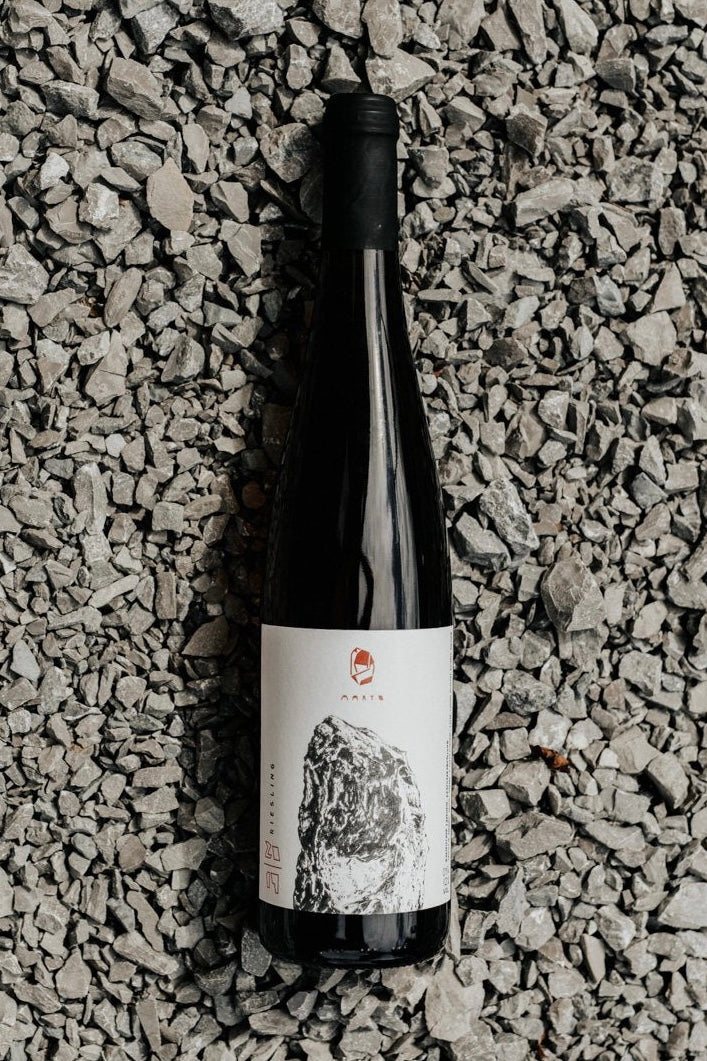
Rheinhessen: in Flonheim, Martin Wörner makes Riesling from a limestone vineyard at 330 metres, aged for about two years in old oak. Marto.
Leithaberg: in Austria too. From Donnerskirchen, Weingut Sommer make a fresh Riesling from quartz soil, and a complex one aged for 46 months on the lees. Weingut Sommer.
Styria: in Sausal, on a steep vineyard of red slate, Wohlmuth make a completely different Riesling. Wohlmuth · The guide to Styria.
How to serve it, and with what
Serve it cold, and take a complex Riesling out of the fridge a few minutes before pouring, so the aromas open. Its acidity works well with fish, sushi, chicken and Asian food, and a broad-textured Riesling also holds up to mushrooms and richer dishes.
Six bottles of Riesling
Questions
01.11.2026