How to read a German wine label
Many people in Israel think of German wine as sweet Riesling, and the label does not always help: long words, village names and terms that sound like a legal document. But the German label has a logic, and once you understand it, it is one of the most precise in the world. In this guide: what each word means, how to tell whether a wine is dry, and what we learned from the labels of our 25 German wines.
What does the label say?
Almost every German label answers three questions. Who: the name of the estate, usually after the word Weingut. Where from: a region, a village and sometimes a single vineyard. What wine: the grape, the vintage, and a word or two about how ripe the grapes were and how much sugar is left in the wine. The confusion arises because those last two words sound alike but say completely different things.
What is Kabinett? Ripeness, not sweetness
Germany’s old ladder, Prädikatswein, grades the grapes by how much sugar they held on the day of the harvest. The riper the grapes, the higher they climb. But the winemaker can ferment all that sugar to the end, and the result is a dry wine. That is why Germany has Spätlese trocken: late-harvest grapes, and a dry wine. Wines on this ladder may not have sugar added to the must; the ripeness has to come from the vineyard.
How do you tell whether a wine is dry?
The most important word on the label is the one that describes the sugar left in the wine. The sweetness terms are set by a European regulation, so they are the same throughout the EU. They are tied to acidity, because high acidity masks sweetness:
If none of these words is on the label, the alcohol can help: a wine with less than 10% alcohol is often one in which sugar was left. But that is only a rule of thumb. Piri’s Quitte-Riesling, a pét-nat with 8.5% alcohol, is completely dry: 0.6 grams of sugar per litre.
What we found on our labels
We went through the 25 German wines we import, from three estates: Piri Naturel in the Nahe, Marto in Rheinhessen and Seckinger in the Pfalz. Not one of them says Kabinett, Spätlese or Auslese. And we have sugar data for 23 of them: in every one the sugar is below 4 grams per litre, and the highest is 3.2 grams. In other words, all 23 are dry by the strictest definition.
That is no accident. Many young German winemakers, the natural ones above all, are giving up the ripeness ladder. They describe the wine by the place it comes from, which is exactly the direction German law took in 2021.
The new ladder: by place
Since January 2021, German law has graded wines first of all by origin, as in Burgundy: the smaller and more precisely defined the area the grapes come from, the higher the tier. The VDP, the association of estates, used such a ladder for years before that, and today many other estates use it too. From the bottom up:
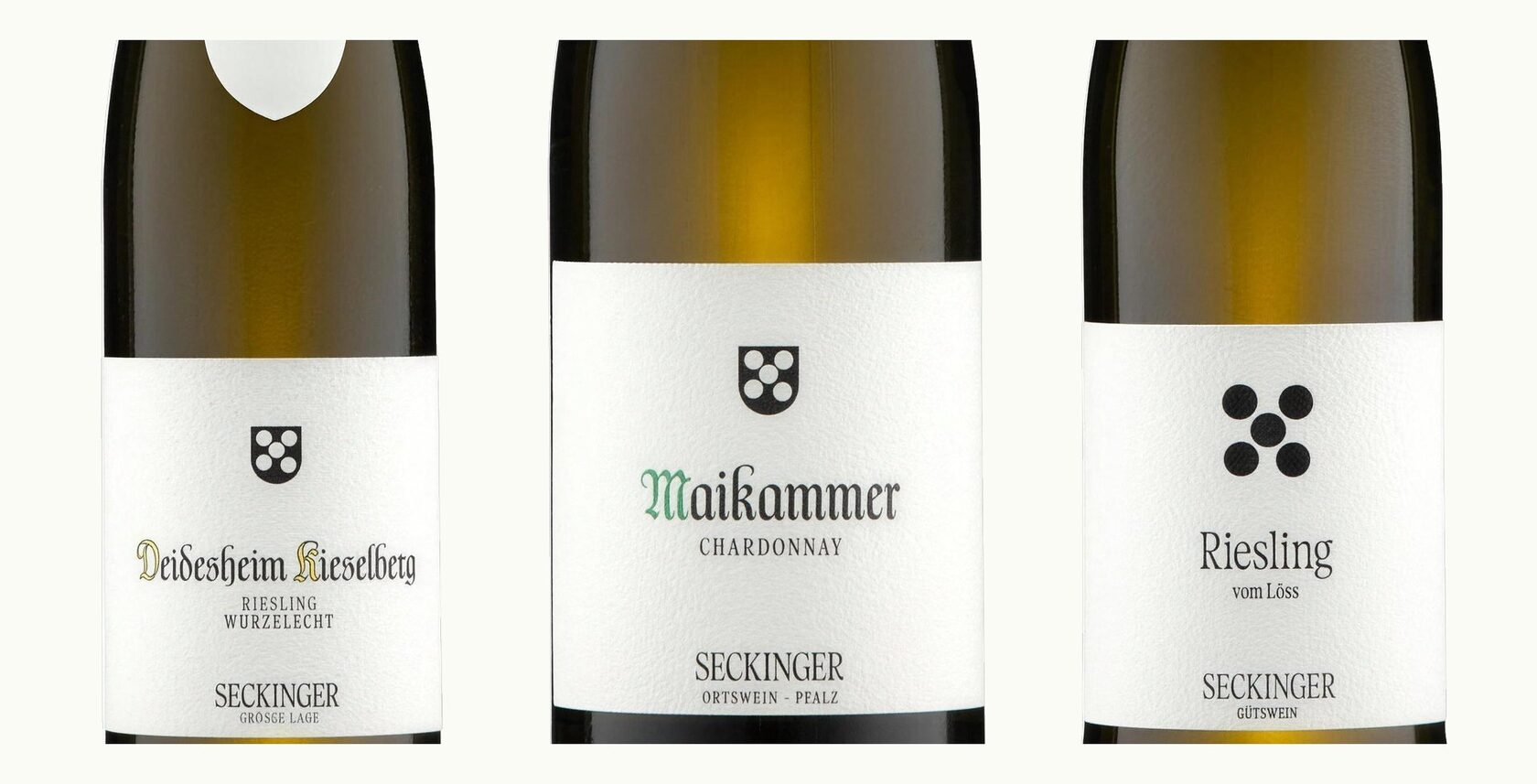
The Gutswein label gives only the grape and the soil: Riesling vom Löss, “Riesling from the loess”. The Ortswein already names the village, Maikammer. And the Große Lage names both the village and the vineyard, Deidesheim Kieselberg. On older labels you will see the village name with the ending -er, for example Deidesheimer Kieselberg: “the Kieselberg of Deidesheim”. The top label carries one more word, Wurzelecht: the vines in this parcel, about sixty years old, grow on their own roots, ungrafted.
Why natural winemakers write Landwein
To be called Qualitätswein, a wine has to pass an official test: a laboratory analysis and a tasting by a panel that looks for a wine “typical” of its region and grape. A cloudy wine, a wine fermented on its skins or a wine with no added sulphur may be rejected. So many winemakers give up in advance and bottle their wine as Landwein, the tier below, which has no tasting panel.
The price they pay is the name. A Landwein label may not give the name of the village or the vineyard. Marto, who makes all his wines in Flonheim in Rheinhessen, bottles his still wines as Rheinischer Landwein, and so cannot write “Flonheim”. What appears instead is a rock: a nod to the village’s red sandstone quarry.
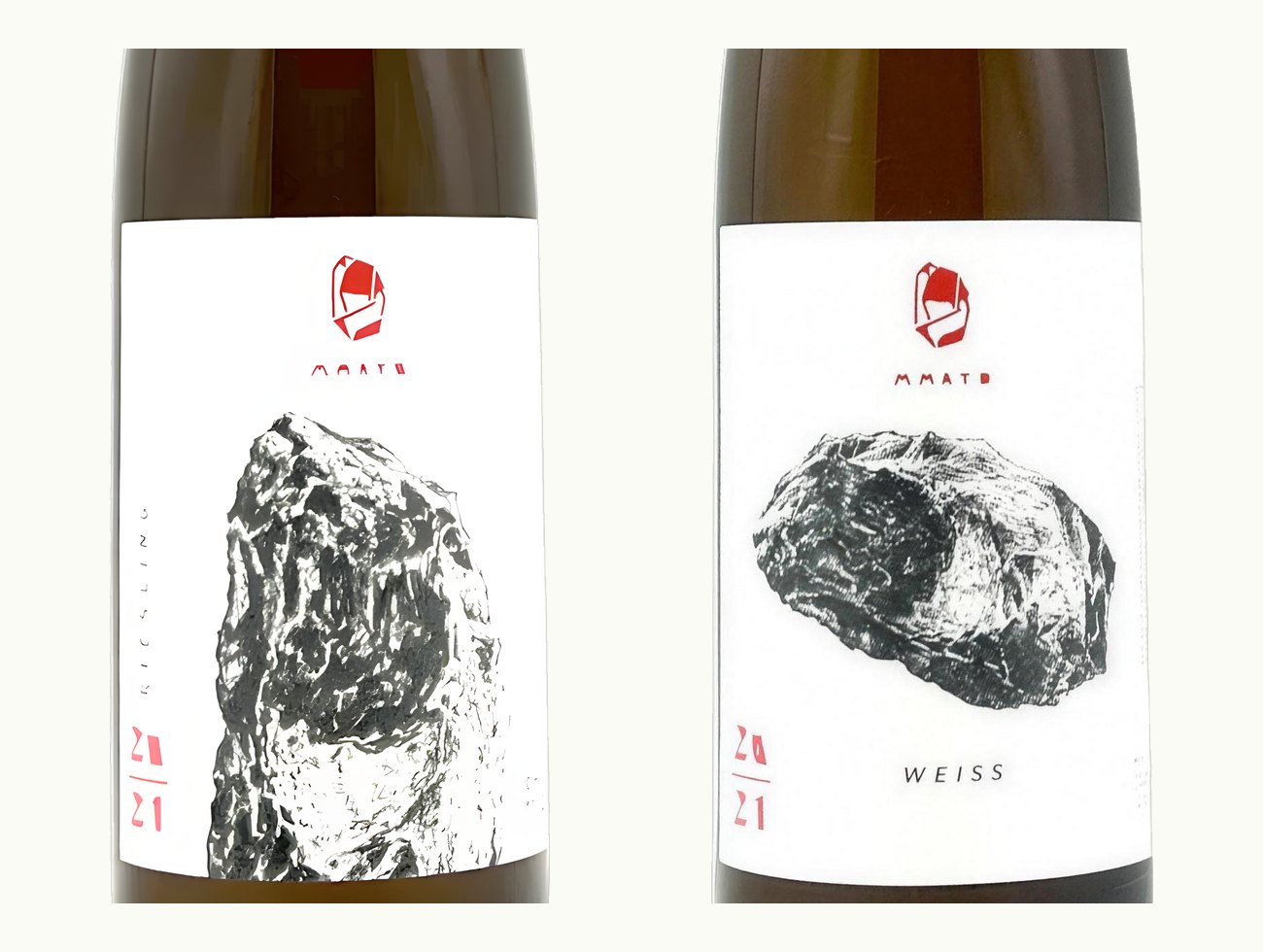
So on a German natural wine, the word Landwein is no sign of low quality. Often it is the sign of a wine that did not try to fit itself to a panel.
A few more words worth knowing
And if you prefer bubbles, note the difference: Alanna LaGamba’s Blanc de Noir Sekt is a Deutscher Sekt, while Marto’s Crazy Crazy is a Deutscher Perlwein, with a gentler fizz. More on wines that finish fermenting in the bottle: the guide to pét-nat.
How to read a label in three steps
1. Find the sugar word. Trocken means dry. If there is no such word, check the alcohol.
2. Find the place. Just a region, a village, or a village and a vineyard? The more precise the place, the more ambitious the wine.
3. Find the tier. Gutswein, Ortswein or Große Lage, and with natural winemakers often Landwein. And if it says Kabinett or Spätlese, remember that this is ripeness, not sweetness.
Seven German wines, seven labels
Questions
Want to read on? Riesling: dry or sweet · German wine: not just sweet Riesling · What natural wine is · The glossary · Marto · Piri Naturel
14.11.2026